Welcome to my
Perfectly Imperfect Life..........
Showing posts with label tips. Show all posts

Saturday, April 1, 2023

Growing and Crafting with Herbs


Fragrant Herbs

Growing herbs is easy and fun.


Here are some tips for growing and simple ways to use or

preserve your homegrown herbs.
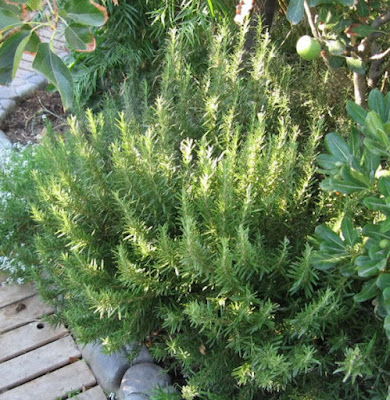
Rosemary

Rosemary is a shrub with fragrant evergreen needle like leaves and will bloom blue flowers along the stems.

Rosemary is best planted in the spring and likes to grow in a sunny spot. A well draining sandy or loamy soil is best. Rosemary is drought tolerant when established.


There are a quite of different ways to use Rosemary. Such as making potpourri, a wreath, add to a floral spray, drink in tea, cooking and more.


*Tip* Make a brush with fresh Rosemary sprigs by tying the ends. Use to add sauce to meat while barbequing. You'll not only brushing on your sauce/marinade but adding Rosemary flavor also.


Lemon Verbena

Lemon Verbena is a flowering shrub with sprawling branches. Lemon Verbena prefers warm weather. Plant your Lemon Verbena in the spring in fertile soil. 


The fragrant slender leaves can be used in a variety of ways. The strong lemony scent bodes well in herbal sachets, bath bombs, soaps and cooking.



Bay Tree

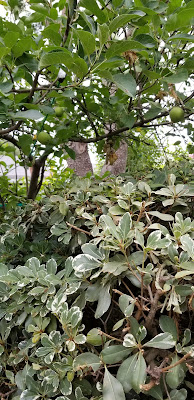
The Bay Tree has large, pointed oval leaves that are deep, glossy green. Plants prefer partial shade but will tolerate full sun. The Bay prefers average garden soil.


Having pliable branches Bays are perfect for making wreaths, swags, even crowns. 


*TIP* Bay trees are easily propagated. Bay Tree propagation begins by taking cuttings, do this in summer when the wood is green and pliable. Take three or so cuttings at least 6'' long. You want the cutting to be firm but the wood should be easy to bend. Strip off all leaves from each cutting except the top two or three. Dip stems in rooting hormone and place in small pots. within a couple of months you should have rooted cuttings. Give them an easy tug, if you feel resistance you have roots!


Sage

Grow sage in the mild weather of spring or fall in well draining soil with lots of sunlight. 


Easily repel mosquitoes by tossing a few sage branches into your outdoor fire. They make excellent smudge bundles, wreaths, herbal sachets, place down the center of your dining table for a fragrant centerpiece base, soaps, decorate candles and more.


*TIP* Herbs are easy to grow. Most like full to partial sun, Semi-moist soil (meaning they can dry out between watering's), and they like to be trimmed. Trimming not only makes them more compact, but gives you trimmings to cook with.
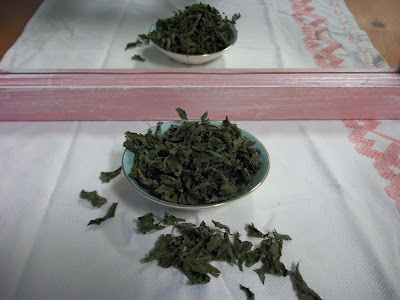


Mint


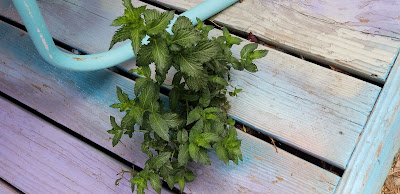
Mint plants grow quickly and should be planted in the spring in a damp, moist area with well-draining soil. Mint likes a spot that's in either full sun or part shade. Its small white or purple summer blooming flowers attract bees, butterflies, and other pollinators.


Mint makes for very fresh and stimulating bath teas, herbal swags, candles, and soaps. dried and crumbled on your carpet, then vacuumed up yields a fresh scented room.


*TIP* Mint loves to spread! Before you know it you will have a good patch of mint. To keep it in bounds, plant in a container to contain roots. Be sure to pinch off any flower buds you see. If you let them flower, seeds will form which is another way they sprout and spread easily.


Growing herbs gives you such a variety of ways to use in home décor and crafts.
Should you not be lucky enough to have an herb garden,
I do have several varieties in my Etsy Shop.


Sunday, December 4, 2022

A Few Great Tips for Winter!


Winter has finally hit in our neck of the woods and we've been having some pretty good frost in the mornings. Here's a tip I read, use breathable crib sheets over your delicate plants.
The elastic sure helps it stay on.

This is something I need to do!
Use foam gaskets to seal electrical boxes.
According to energy experts, electrical boxes that hold switches 
 or outlets are major sources of heat loss. 
 Foam gaskets (reasonably priced at home centers) won’t completely seal the boxes, but they’ll help. 
 They’re quick to install— just take off the cover plate,
 stick the gasket over the box, then put the plate back on.
Easy peasy!
Now this is clever!
Use bubble wrap for window insulation! 
Cut the bubble wrap to fit the window pane with scissors.
  Spray a film of water on the window using a spray bottle.
  Apply the bubble wrap while the window is still wet and press it into place.  The bubble side goes toward the glass.
  To remove the bubble wrap, just pull it off starting from a corner.  You can save it and use it for several years.  It does not leave a mess or stains on the window glass.
Another easy peasy!

During the Winter the home can smell a little musty from being all closed up, I thought this was great hack too! And easy!
With the Holidays comes seeing friends and relatives you may haven't seen since last year. That also means sharing of the viruses, colds, flus, and any bugs to be had. We all know stress weakens our immune system and although we all look forward to seeing each other it can be stressful. So here's a few tips to help out with any bumps, bruises, headaches, bugs, etc. that may come your way.


1 tablespoon honey
1/4 teaspoon cinnamon
 Combine the honey and cinnamon in a bowl.
Eat it plain or mixed into tea or
applesauce 4 times a day until cold symptoms are alleviated.
Only for children over 1 year of age.


Saturday, September 3, 2022

Is Your Home Ready for Fall?


5 Top Items on Your Fall Home Maintenance Checklist

Fall’s gently tumbling leaves seem so peaceful, they can also be a wake-up call that winter's coming. Now’s the time to take care of some important home maintenance. Use this list as a guideline to get your home ready for the cold weather ahead.


By doing these projects now, you can avoid some costly repairs and feel confident that you’ll be warm and comfortable when the cold weather arrives.

1. Get Your Heating System Humming

You don’t want to wake up on the coldest morning to find you have no heat. Schedule a furnace checkup now. An expert technician will make sure everything is running properly and that your system meets the manufacturer’s rated efficiency. The checkup will also measure carbon monoxide leakage.


2. Prevent Gutter Gridlock

Leaves, twigs and other debris can clog gutters, causing water to back up and flow into your house. Save yourself from this expensive repair by cleaning the gutters after your leaves have fallen. Tighten gutter hangers and downspout brackets, and replace any worn sections. Check that your downspouts extend at least five feet away from the foundation. If not, you can buy inexpensive extensions and attach them.


3. Take a Caulk Walk

Walk around the exterior of your home and check it for air tightness. Carefully look for cracks, which can be the source of air leaks, energy loss and money down the drain. An inexpensive tube of caulk can help prevent energy loss and also help prevent moisture from getting inside the walls of your home. Caulk and seal air leaks where plumbing, ducting or electrical wiring comes through walls or floors.


Most Common Source of Air Leaks

Dropped ceilings
Recessed lights
Attic entrance
Sill plates
Water and furnace flues
All ducts
Door and window frames
Chimney flashing
Outlets and switches
Plumbing and utility access
Critter entrances

4. Get a Look at the Roof

You don’t need to get up on the roof to spot trouble areas. Stay on the ground and use binoculars to look for buckled, cracked or missing shingles. If you find any, replace them right away. Examine the flashing and look for any rust spots, which could expose your home to damaging leaks. The good news is you can clean, prime and seal the rust fairly easily yourself. Also, if you spot large areas of moss, your roof may be rotting underneath. Call a roofing professional rather than trying to tackle it yourself.


5. Clean Out the Chimney


Looking forward to a cozy fire? Better make sure your fireplace, chimney and vents are clean first. A good cleaning by a professional chimney sweep can help prevent chimney fires and carbon monoxide buildup. Some DIY measures you can take include keeping the fireplace damper flue tightly closed when not in use and sealing seal air leaks with fire-resistant materials like sheet metal or sheetrock.


Get these projects knocked out and your home will be warm and cozy for winter. Then head to the store and load up on hot chocolate and some good books.


More tips here

Wednesday, August 24, 2022

Composting Equals Surprises


Another lazy gardener tip!
 I have no room for a compost pile nor the energy to tend to it.
So this is my little hack.

I collect all fruit and vegetable peels along with trimmings, eggs shells, coffee grounds, tea bags, fruit or veggies past their prime, etc.  They are added to a bowl I keep on my counter (I'm sure you could find something much prettier).


When I get a chance I bury them around my gardens.

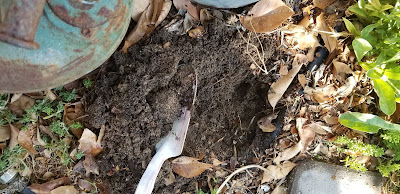
Just dig a hole 


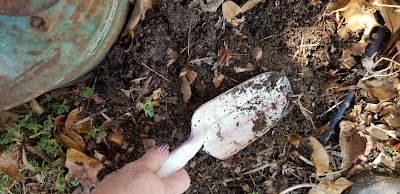
Add trimmings from the bowl


Cover with dirt and tamp down.

The trimmings will decompose adding nutrients to your garden as well as feed your worms.

NOW come the SURPRISES!

You just never know what will pop up when composting this way.

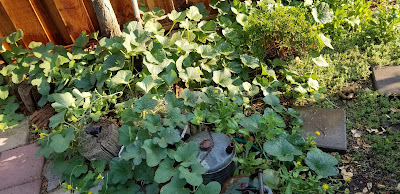
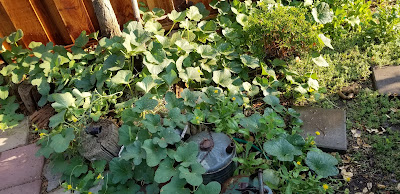
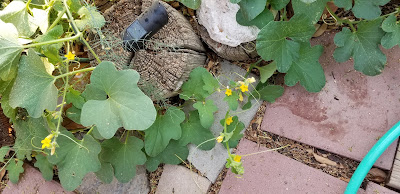
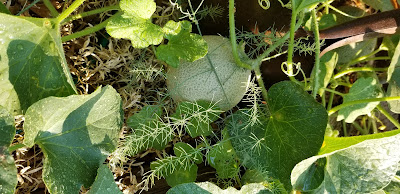
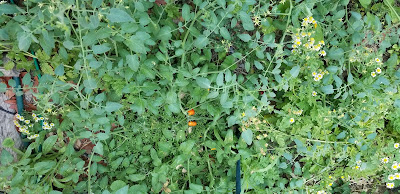
This year I have these awesome volunteer plants!

Onions

Cantaloupe that is taking over

Full of blooms

With Cantaloupes almost ready to pick


This Cherry Tomato made it through 2 Winter so far!
And it's producing for the 3rd year!
I don't know how that is possible 
but I have watched it very closely and it is the same plant.

So not only are you making your gardens healthier, reducing your waste, and feeding the worms, but you just may get some volunteer plants along the way.


More garden posts here

Wednesday, June 8, 2022

In The Garden ~ WW

What's has caught my eye this week?


Similar posts


Sunday, November 21, 2021

November Gardening Tips


Gardening

Tips


■ Clean, sharpen, and oil 
garden tools.
■ Start forcing bulbs 
like paperwhites, hyacinth, 
and amaryllis for the 
holidays
■ Add organic matter 
to beds
■ Cover compost so that 
rain doesn't 
flood and leach the nutrients
■ Keep weeding

Frost Tips


■ Prune flowering trees 
as they drop their blossoms
■ Plant Roses, Azaleas and
Camellias, and Tropical Fruit 
Trees suited to your area
as they become available
■ Keep planting bulbs that don't
require a cold period 
(amaryllis, anemone, calla lily, 
freesia, homeria, lilies,
oxalis, Ranunculus, Sparaxis, 
watsonia) and annuals with 
cool season bloomers
■ Keep your fall vegetable 
garden going.
■ Sow wildflower seeds
■ Keep an eye out for
 insect pests


.

.
Blog Widget by LinkWithin